Kitchen Renovation in Bellevue, WA
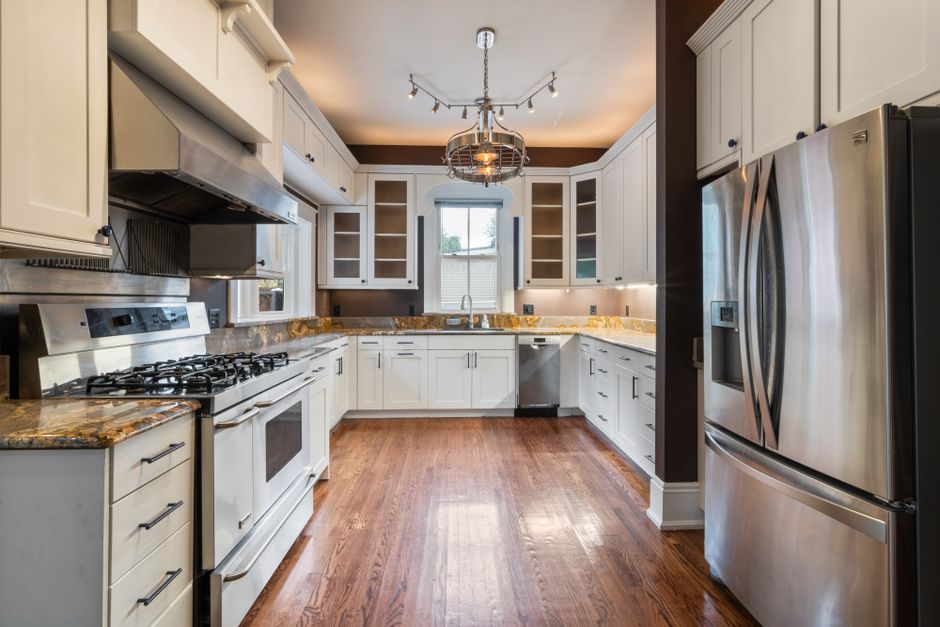
Notes from the crew side on phasing a kitchen renovation in Bellevue, WA, and getting a household through the weeks without a working kitchen.
What We Cover
- Dust and noise control while you live in the house Zip walls, floor protection, air movement and work hours for a household staying put during a kitchen renovation.
- The order of work in a kitchen renovation Why demolition, rough-in, inspection, cabinets, counters and finish work have to happen in a fixed sequence.
- Permit and inspection pauses that stop a kitchen job What inspections happen mid-project in Bellevue and why walls stay open until they pass.
- Scheduling a kitchen renovation around the wet season How Eastside rain from fall to spring changes deliveries, demolition debris, and when the exterior wall can be open.
- Setting up a temporary kitchen during a Bellevue remodel Where a temporary kitchen goes, what it needs, and how Bellevue households cook through weeks without a range or sink.
- What to decide before demolition day Selections and measurements that must be locked in before the old kitchen comes out.
Kitchen Renovation in Bellevue, WA
A kitchen renovation in Bellevue, WA is rarely a single job. It is a string of trades arriving in a set order, with a household still eating, washing up and getting to work in the middle of it. Most of the trouble on these projects comes from the order and the pauses, not from the finished look. The notes here are written from the crew side, covering how the work is phased and what living through it is actually like.
Phasing the work
Demolition comes first, then framing fixes, then plumbing and electrical rough-in, then a stop for inspection before any wall is closed. Cabinets follow drywall and paint, countertops follow cabinets, and the backsplash and finish fixtures go in last. Each step depends on the one before it, so a late cabinet delivery or a failed inspection moves everything behind it.
Living in the house during the job
Staying home through a kitchen project means a temporary setup in the laundry room or garage, a refrigerator relocated to a hallway, and dust barriers taped across doorways. Houses in Crossroads and Factoria sit close together, so noise and work hours matter to the neighbors as much as to the family. Planning where the dishes get washed saves more frustration than any finish choice.
Weather and the Eastside calendar
Rain from the fall through the spring affects when a dumpster can sit in a driveway, when an exterior wall can be opened for a window or a hood duct, and how fast paint and mortar dry. Neighborhoods up on Cougar Mountain have steeper driveways that complicate deliveries, while homes closer to Lake Washington and Lake Sammamish deal with damp air for much of the year. A schedule with slack in it handles most of this.
Older homes and surprises
Houses near Mercer Slough and across the Eastside were built in several different eras, and opening a wall can show wiring or framing that nobody planned for. Those findings are part of the job, and they are the reason the early phases are kept flexible. Decisions on cabinets, appliances and lighting are best settled before the first wall comes down.
Guides
The pages here cover setting up a temporary kitchen, the order of trades, dust and noise control, scheduling around the rain, the permit and inspection pauses, and the decisions to lock in before demolition day.
Latest Guides
How do you live in a house with kids, pets and a home office during a kitchen renovation?
Most advice about a kitchen renovation covers cabinets and counters. Very little covers the Tuesday morning when a video call starts at nine, the dog is barking at a tile saw, and a seven year old needs breakfast from a kitchen that no longer has a sink. Households in Bellevue, WA that stay home through the work spend far more energy on those mornings than on any finish choice. This article walks through the practical side: where people work, where children play, how animals cope, and what the crew can do to make the weeks easier.
Why does a remodel hit a household harder than people expect?
A kitchen is the busiest room in a house. Meals, homework, mail, medication, pet food and coffee all run through it. Take it away and every habit has to be rebuilt somewhere else, usually in a room that was never meant for the job. The disruption is not just noise and dust. It is the loss of a routine that nobody noticed until it stopped.
The work also arrives in waves. Demolition week is loud and messy. The weeks after, when inspections and deliveries set the pace, are quiet but leave the room open and unusable. Then the cabinet and counter phases bring saws and compressors back. A household that plans only for the first week tends to be worn out by the fifth.
Where does the home office go?
The first decision is which room stays quiet. A bedroom on the far side of the house from the kitchen is the usual answer, and it works better than a corner of the dining room, which is often right next to the work zone. Many houses in Crossroads and Factoria have a compact floor plan where the kitchen, dining room and living room share walls, so distance is hard to find. In that case the quietest hours matter more than the quietest room.
Ask the crew lead for the loud tasks in advance. Demolition, tile cutting, drilling into masonry and running a nail gun are the ones that carry through walls. Most crews can cluster them into a few blocks of the day, and a worker on calls can schedule around those blocks. A set of closed-back headphones helps, and so does a rug and a door sweep in the bedroom that becomes the office.
Power matters too. A temporary kitchen, a space heater and a home office on one circuit is a recipe for a tripped breaker in the middle of a meeting. Ask the electrician which circuits stay live and which are cut during rough-in, and move the laptop and router to one that will not be touched. A small battery backup for the router is cheap insurance against a surprise shutoff.
How do children cope with a house under construction?
Young children treat a jobsite as the most interesting place in the world, and that is the main safety problem. Nails, cut ends of wire, open floor joists, a table saw on a stand and a stack of drywall are all within reach of a curious hand. The barrier across the kitchen doorway is not only for dust. It is the line children are told never to cross, and it works best when it is a real door with a latch set above their reach.
Older children care more about routine. Breakfast, a place for homework and a quiet corner for screens settle most arguments. A folding table in the living room with a tray of cereal, fruit and a kettle covers most mornings. Letting a child pick the spot, and the plastic cups, gives them a stake in the arrangement.
Some families find it helps to give children a role in the project. Watching a framing crew move a doorway, or seeing the inspector check a wire, turns the mess into something to follow. A calendar on the refrigerator with the major phases marked in colored pencil answers the question of when the kitchen comes back without anyone having to ask it daily.
What about dogs, cats and other animals?
Animals react to the unfamiliar. A dog that has never heard a demolition hammer may bark for hours or hide under a bed. Cats tend to bolt for a door that stays open while materials come in and out. Both are real risks, because a pet that slips out during a delivery in a neighborhood near Cougar Mountain or along the roads off Lake Washington is hard to track down.
The steps that work are simple. Keep a pet in a closed room with food, water and a familiar bed during the loudest hours. Tell the crew which doors must stay shut. Put a note on the front door during deliveries. Microchip data and collar tags should be current before the job starts, not after. Dogs that are anxious on a normal day may do better at a friend's house for demolition week.
Dust and chemicals deserve a thought too. Adhesives, paint, sealers and the fine powder from cutting stone or drywall are all things animals should not lick or breathe in. Birds and small animals in cages are especially sensitive to fumes, so a cage belongs in the room farthest from the work, with a window cracked when the weather allows. Rabbits and guinea pigs can overheat or stress in a closed room, so check on them often.
How do you handle meals without a kitchen?
A few meals repeat well. Sandwiches, pasta cooked on a single induction burner, slow cooker stews and grilled food on a deck cover most of the week. Cold items go in a refrigerator that has been moved to a hallway or dining room. Paper goods cut the dishes. The laundry sink or a bathroom tub becomes the washing station, and a plastic dish bin keeps things tidy.
The point is to avoid rebuilding the old kitchen in miniature. A household that tries to cook elaborate meals in the laundry room tires out quickly. One that accepts simpler food for six weeks usually finishes the project in a better mood. Takeout from the restaurants downtown near Bellevue Downtown Park is a fine break now and then, and a cooler on the porch handles overflow in cool weather.
When is it better to move out for a stretch?
Some projects justify leaving. A gutted kitchen with open walls, no water and an infant, or a household with a member who is immune compromised or has a respiratory condition, is a case where a short stay elsewhere makes sense. Dust control helps, but it does not make a jobsite clean.
Many families split the difference. They stay for the quiet weeks and go to relatives for demolition week and for the days when stone is cut or floors are sanded. A short stay with a family member near Lake Sammamish or on the other side of the Eastside avoids the worst of the noise without the cost and hassle of a full move.
What should be said to the crew before work starts?
A short list covers most of it. Which rooms are off limits. Which hours are quiet because of calls, naps or school schedules. Which doors must stay closed for the animals. Where the family parks, so deliveries do not block a driveway. Who has the key, and who is home on each day. A crew that knows these things up front will work around them. A crew that finds out on day three has already made noise at the wrong time.
Asking how the crew handles dust at the end of each day is a fair question. So is asking who to call when something goes wrong. A single contact, one phone number and one person who answers, prevents a lot of friction when a pet gets out, a call is interrupted or a neighbor complains.
How do you keep the household calm over several weeks?
Small routines help. A fixed time for the daily walkthrough with the lead lets the family ask questions in one block rather than all day. A weekly look at the schedule shows where the project stands. A clean spot in the house with no tools and no dust, even a single chair by a window, gives everyone a place to reset. Finally, pictures taken on the first day of demolition are worth looking at in the final week, when the dust is gone and the new kitchen is in.
A remodel in a lived-in house is hard on a household, and planning for the people and animals in it makes the project go more smoothly than any amount of attention to the materials.

What happens when a kitchen renovation runs behind schedule?
Nearly every kitchen renovation moves off its first schedule. A cabinet shipment arrives a week late, an inspector finds a wire that needs to be re-run, a wall opens to reveal something nobody planned for. None of this means the job has gone wrong. What matters is how the delay is read, how the remaining work is re-sequenced, and what the household does in the gap. The questions below are the ones homeowners in Bellevue, WA ask most often once a project starts to slip.
Why do kitchen schedules slip so often?
A kitchen job depends on a chain of trades and deliveries, and each link waits on the one before it. The framer finishes, then the electrician and plumber rough in, then the inspector looks, then drywall goes up, then paint, flooring and cabinets, and only after the cabinets are fixed does the countertop fabricator come to measure. If any one of those steps runs long, every step behind it shifts. A two day delay at the front can turn into a two week delay at the back, simply because trades are booked on other jobs and cannot always slide in on short notice.
Houses in the neighborhoods around Crossroads and Factoria were built in several different periods, and the age of a house changes what a wall holds. Opening it is the only way to find out. That is why the first phases are the ones most likely to change.
What are the most common causes?
The list is short and repeats from job to job.
- Material lead times: cabinets, stone slabs, special order tile and appliances all arrive on the supplier's calendar, not the crew's.
- Hidden conditions: old wiring, rot behind a sink, a notched joist, a duct that was routed through the wrong wall.
- Inspection timing: work behind the walls stops until the city signs off, and the visit depends on the inspector's schedule.
- Changes of mind: a new window, a different range or a moved island after the walls are open.
- Weather: rain from the fall through the spring slows deliveries, exterior openings and drying.
- Trade overlap: a plumber and a tile setter who both need the same room on the same day.
Some of these can be avoided by planning. Material orders placed early and selections locked before demolition prevent a large share of delays. Hidden conditions cannot be avoided, only anticipated.
How does a crew re-sequence the work?
When one step stalls, a good lead looks for work that can happen without it. If cabinets are late, flooring in an unrelated area, painting the ceiling, installing trim in the adjoining room or setting the range hood duct may be done in the gap. If the countertop fabricator is behind, the backsplash prep and the electrical trim can often go ahead.
Some steps cannot move. Countertop templates need cabinets that are fixed in place. Finish plumbing needs counters. Final inspection needs everything else. So the lead's job is to fill the gap with the tasks that are free and to protect the date of the ones that cannot flex.
Should the homeowner expect a new date right away?
A realistic new date usually needs a few facts first. When does the missing item actually arrive, not when was it promised? When is the next inspection slot? Which trades have to come back, and are they free? A lead who answers with a firm date on day one, before checking any of this, is guessing. A better answer is a range with the open questions named, followed by a firm date once they are settled.
Asking for the update in writing, even as a short text message, creates a record that the household can refer to later. It also forces the schedule into a form that can be compared with the next update.
What can a household do during the wait?
Waiting is the hardest part when the kitchen is a shell. The temporary setup has to last longer than planned, so it helps to improve it a little: a second shelf for dry goods, a better spot for the dish rack, a dedicated surge protector for the refrigerator. Meals can be simplified further. Families near Lake Washington or up on Cougar Mountain often use the extra weeks to catch up on tasks outside the kitchen, such as painting a bedroom or sorting a garage.
This is also a time to re-check the open decisions. If lighting, hardware or backsplash tile has not been picked, the pause is the moment to do it, since those choices will be needed within days of the work resuming. A decision made late is a common source of the next delay.
When is a delay a warning sign?
A delay with a cause is normal. A delay with no explanation is not. Warning signs include a crew that stops appearing without notice, a lead who cannot say what is holding things up, materials that were promised and never ordered, and a pattern of missed updates. In those cases the homeowner should ask for a meeting on site, walk the work with the lead and write down what is done, what is not and who is responsible for each remaining step.
Quality matters as much as speed. A crew that rushes to make up time sometimes skips steps, such as letting mud dry fully, curing grout or checking that cabinets are level. A slower finish that is done correctly is better than a fast one that shows problems in the first year.
How do changes of mind affect the schedule?
A change after demolition touches more than the item changed. Moving a sink by two feet means a new drain line, a new vent, a different cabinet layout and possibly a new inspection. Adding a window means framing, flashing, a header and trim, and it requires a dry forecast. Even a small change like swapping a pendant for a recessed light can require a new box in a closed ceiling.
The best protection is a written list of selections signed off before the job begins. When a change is still wanted, the crew can say how many days it adds and which trades it affects, so the household can decide with the full picture.
Is there a way to plan for slippage in advance?
Yes. A calendar with a week or two of slack at the end absorbs most of what goes wrong. Holiday gatherings, a move-in date, a visiting relative or a school break should not be tied to the last day of the project. Households in the Eastside often plan the work for spring or summer, then discover the lead times for cabinets push the start into the wet season anyway, so a flexible plan beats a rigid one.
Ordering long lead items before demolition, keeping the old cabinets until the new boxes are on site and confirming the inspector's availability early all reduce the number of surprises. They do not remove them.
What does a good delay conversation sound like?
It names the cause, the affected phase, the earliest realistic date and the steps being taken in the meantime. It does not blame a supplier, a neighbor or the weather without evidence. And it ends with a time for the next update, so the household is not left to chase it. A short, honest note on a Friday afternoon is worth more than a long apology on Monday.
A late kitchen is frustrating, and a clear picture of why it is late and what happens next makes it much easier to live with.